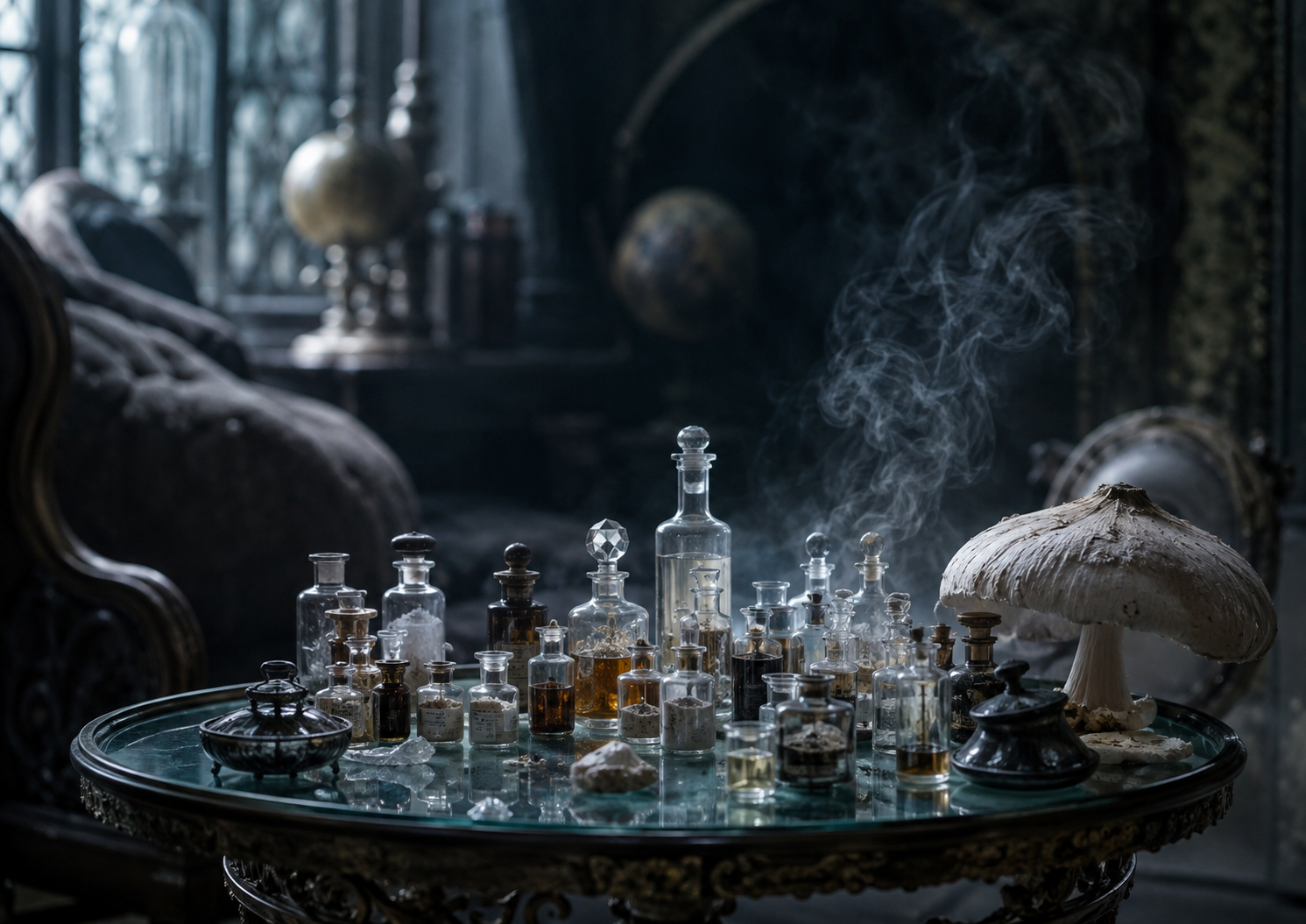
Little Bottles (Alice, Annotated #4)
Across a shelf crowded with little bottles, a woman searches for the version of herself medicine keeps promising to restore. Using Wonderland’s potions, mushrooms, and Caterpillar logic, the poem traces side effects, failed treatment, and the exhaustion of being asked to keep changing while no one seems to listen to who she already is.

Keyhole Girl (Alice, Annotated #3)
In a world that keeps moving the threshold, a woman learns to mistake shrinking for progress and self-erasure for transformation. Through Wonderland’s bottles, keyholes, and changing proportions, the poem examines the cruel promise that life will become easier if only the body becomes small enough.

Before The Paint (Alice, Annotated #2)
At the edge of a carefully tended world, a woman watches beauty, breeding, and silence work together to conceal what should have been named. The poem uses Wonderland’s garden to examine class adjacency, Catholic shame, and the cost of growing up as the wrong kind of flower in a family that prized appearances above tenderness.
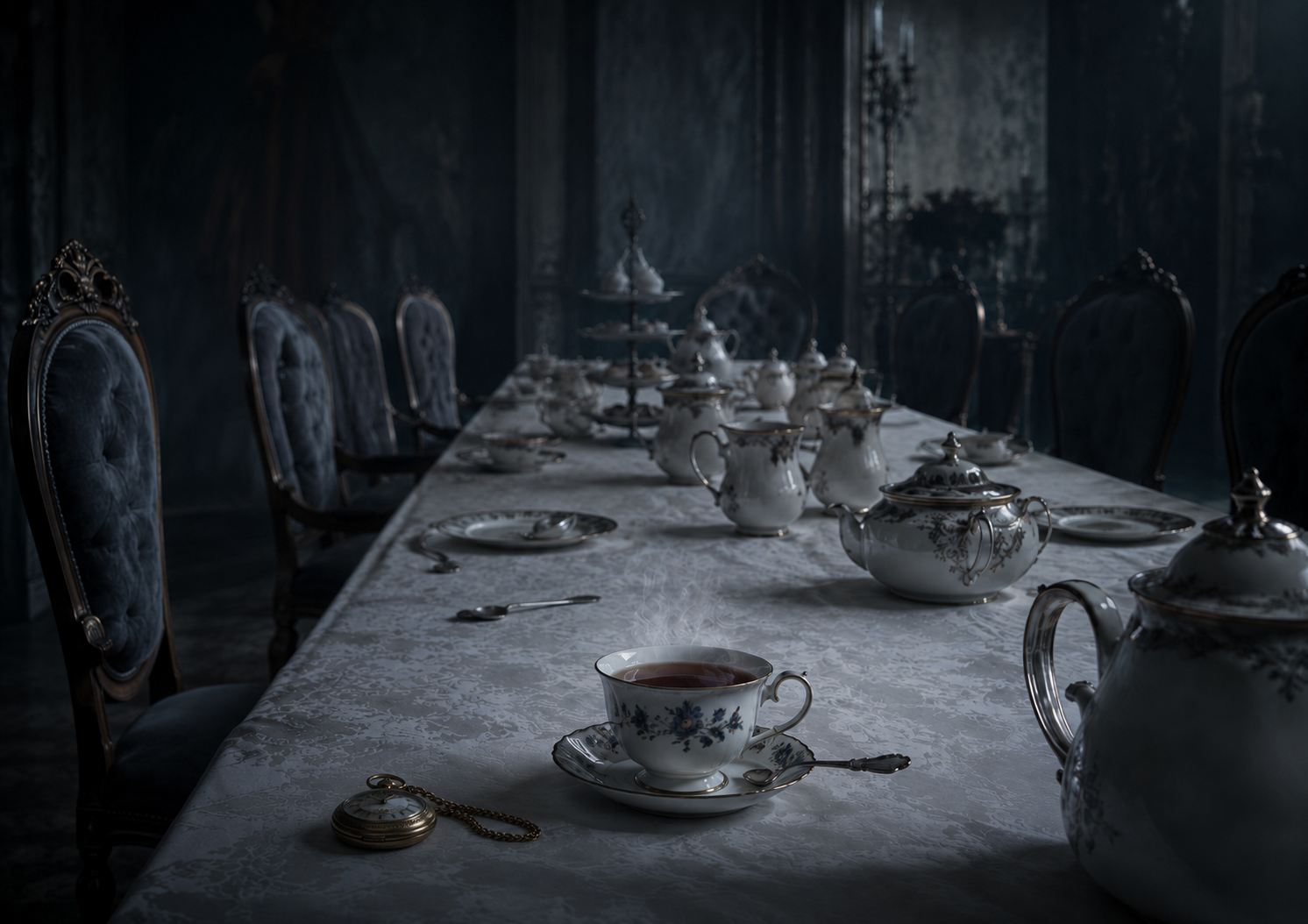
The Wrong Teacup (Alice, Annotated #1)
At the edge of a crowded tea table, a woman searches for the hidden rules that never seem to apply kindly to her. The poem uses Wonderland to render the ache of masking, overstimulation, and being made to feel out of place in rooms that insist there is no room at all.